

Many English learners are often confused about the difference between sore and ache because both are associated with pain and discomfort. Although they may seem similar, native speakers use these words in different contexts.
To help you sound more natural and fluent when using these two terms, let’s explore the difference between sore vs ache here.
Sore: Tender, Local, and Right There
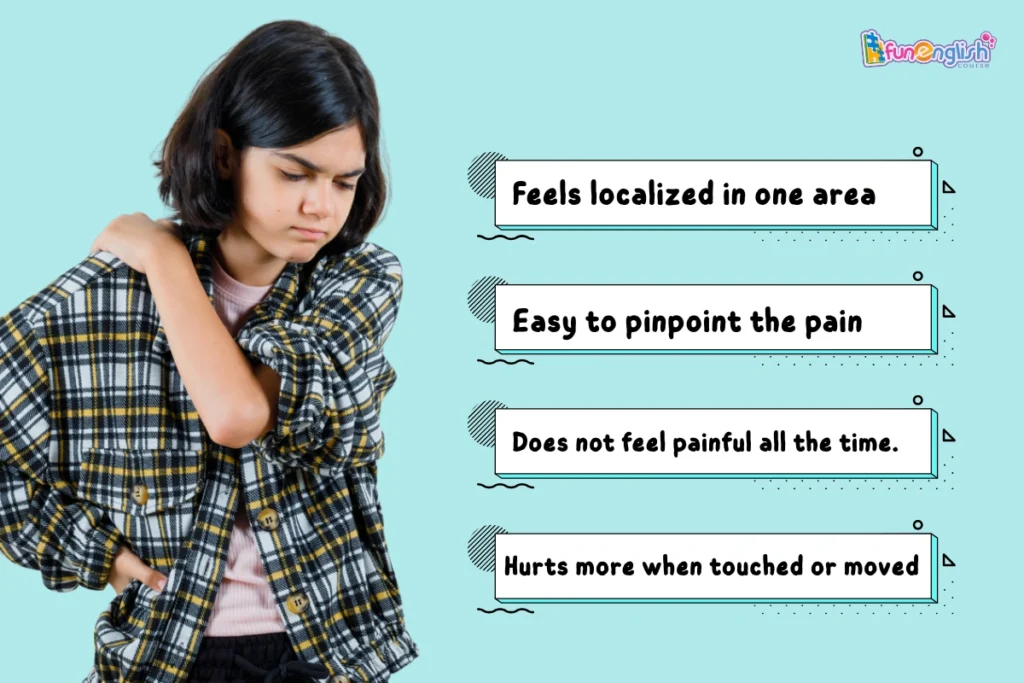
Are ache and sore the same? No, they’re not. If you are searching for the sore pain meaning, the word sore refers to pain that feels tender, sensitive, or painful in a specific area of the body (feels localized, making it easier to identify where the pain is coming from).
It does not feel painful all the time. The discomfort often becomes more noticeable when you move, touch, or put pressure on the painful area.
When to use sore depends on the kind of pain you want to describe. The term is commonly used for discomfort caused by exercise, irritation, pressure, or muscle strain.
Sore as an Adjective
This is how you will use sore most of the time: to describe a body part that hurts.
- My shoulders are sore from yesterday’s swim practice.
- His feet were sore after hiking in new boots.
Notice the pattern: sore + body part, or body part + is/are sore
Sore as a Noun
A sore (noun) is a painful spot on the surface of the skin: usually an open wound or infected area.
Examples:
- He had a sore on his lip that wouldn’t heal.
- The doctor cleaned the sore on her knee carefully.
Notice the pattern: a/the + sore (singular) or sores (plural)
“Quick Tip for Learners: When sore is an adjective, it describes how something feels. When sore is a noun, it describes a thing you can see on the skin.”
Ache: Deep, Dull, and It Just Won’t Quit
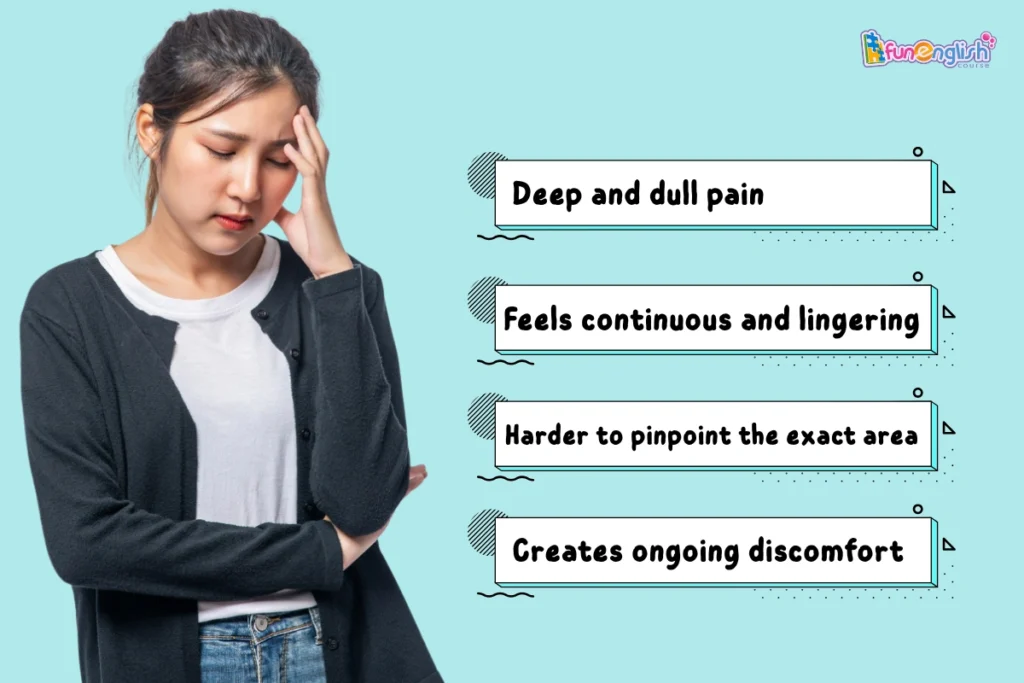
Ache describes a pain that feels deep, dull, and continuous. If you have ever wondered “when can we use ache?”, the answer is when the pain is not sharp or sudden, but stays for a while and creates an ongoing uncomfortable feeling.
Unlike soreness, an ache can feel more diffuse and harder to pinpoint. It often lingers in the background rather than hurting intensely for a short moment.
Think about these everyday situations:
- A headache that slowly builds throughout the afternoon
- That dull throb in your lower back after six hours at a desk
Ache as a Noun
When ache is a noun, it refers to the pain as a thing, something you have or feel.
Examples:
- I’ve had a headache since this morning.
- There was a constant ache in my knees after hiking.
Notice the pattern: ache often combines with a body part to form a single word, like headache, stomachache, backache, and heartache. But for other body parts, you say ache separately: a muscle ache, an ache in my jaw.
Ache as a Verb
When ache is a verb, it describes the ongoing action of hurting. The pain is something your body does, not just something you have.
- My back aches every time I sit too long.
- His whole body ached the morning after the marathon.
Notice the pattern: body part + aches/ached. The body part becomes the subject of the “aching.”
Difference Between Sore and Ache: Easy Differences to Remember
| Aspect | Ache | Sore |
| Meaning | A deep, dull, continuous pain | Surface-level, tender, or stiff |
| Pain Feeling | Heavy, throbbing, lingering | Sensitive when touched or moved |
| Common Causes | Illness, injury, stress, long-term discomfort | Exercise, overuse, irritation |
| Common Body Parts | Head, back, teeth, stomach | Throat, muscles, feet, skin |
The difference between sore and ache isn’t complicated once you see it clearly. Sore is right there, specific, and sensitive, while ache is deeper, slower, and more persistent. Get these two right, and you’ll express pain in English the way a native speaker naturally would.
Want to learn more everyday English vocabulary? At Fun English Course, we teach practical, natural English for real-life conversations. Explore our programs and find the right class for your level and goals. Not sure where to start? Talk to Fun English Course team!