

All parents seek their child’s well-being. In a globally connected era, English proficiency offers a clear benefit. But conventional approaches, such as rote memorization of word lists or grammar drills, tend to bore children. Fortunately, fun English learning for kids does not demand elaborate plans.
Instead, fun learning works through songs, games, or stories. That said, parents can easily integrate these fun learning activities into daily routines.
How to Make Learning English Fun for Kids? 6 Activities to Try
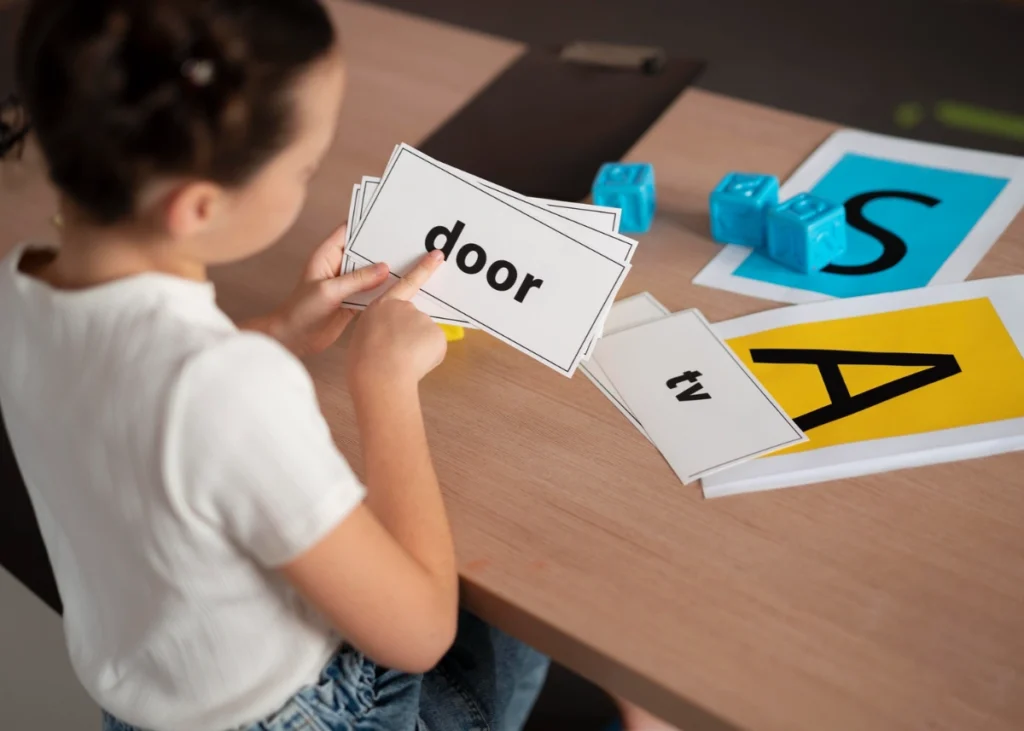
You do not need expert skills to teach your child English. Try these six simple, research-backed activities at home. These fun English learning activities for kids are easy to implement, and you can start them today.
1. Sing Along to English Songs
Music helps children learn languages. Songs like “Head, Shoulders, Knees and Toes,” “Old MacDonald,” “The Wheels on the Bus,” or “Baby Shark” teach vocabulary, pronunciation, and grammar naturally.
In fact, they do this without even realizing they are learning. Therefore, singing these songs can be a productive and enjoyable way to reinforce English skills at home.
How to Do It at Home:
- Play simple English songs during bath time, car rides, morning routines, or bedtime.
- Ask your child to sing, dance, or act out the words.
- For best results, select songs with repeated choruses, because these allow your child to participate almost immediately.
2. Play with Flashcards
Flashcards work for vocabulary. Research backs them for three reasons: they use pictures, repeat words, and keep kids involved. In turn, they are simple but effective.
How to Do It at Home:
- Turn flashcard practice into a game. For example, play “guess the word” or match pictures to words.
- Label household items: door, table, chair, bed, etc. with sticky notes in English.
- For active play, put cards on the floor and have your child jump to the right one when you call it.
3. Role Play in English
Role play works well for teaching primary school children English. Acting as chefs, doctors, astronauts, or superheroes lets them practice real phrases without pressure. Research supports the use of strategic, student-driven role play for fostering creative dialog and reducing speaking anxiety.
How to Do It at Home:
- Set up a pretend restaurant and take turns being the customer and waiter. For example, practice phrases like “Can I have a burger, please?” Similarly, play doctor and patient to practice simple conversations such as “What’s wrong with you?”
- Act out story characters or superheroes. (The sillier, the better!)
- Use short, repeated phrases. Repetition plus action locks in learning.
4. Watch English Cartoons or Movies (the Right Way)
Videos offer a natural channel for children to pick up new words and sounds. But passive viewing wastes that chance.
Research says: sit with your child, talk about what you see, name items, and ask questions. Both of you will talk more when you watch together. In turn, this simple habit doubles the learning.
How to Do It at Home:
- Use Indonesian subtitles first, then English subtitles, then none.
- Keep clips short, 5 to 10 minutes. (Under-6s should get less than 1 hour of screen time daily.)
- After the video, ask: “What did Peppa do?” or “Why is she happy?”
- Watch together, talk during the show, and use new words later in real life.
5. Storytime with English Picture Books
Reading stories is a classic way to learn a language. Storytelling helps kids develop skills and is used in schools worldwide.
Research says it works through interaction, pictures, teamwork, and good language models. Reading together connects words to meaning. Even a few minutes at bedtime makes a difference. Accordingly, pick a short book tonight and read aloud with your child.
How to Do It at Home:
- Pick short English picture books with colorful illustrations.
- As you read, point to each image and name it clearly—for example, “flower,” “cat,” “ball,” or “sun.”
- Pose easy comprehension questions like “What is this?” or “What is the cat doing?”
- For extra material, take advantage of free online storytelling platforms.
- Use expressive intonation and animated voices to keep your child engaged.
6. Play English Games
Games turn learning into fun, and fun is how kids learn best. Research indicates that fun English learning games for kids strongly boost language skills. Why?
Games motivate kids, make them think, provide real-life contexts, and adjust to their level. Furthermore, these interactive settings allow for repeated practice without boredom or frustration.
Games to Try at Home:
- Simon Says
- Pictionary
- Toy hunt
- Animal charades
- Shopping game
- Ball talk
Why Fun English Course Complements Your Child’s Learning Journey
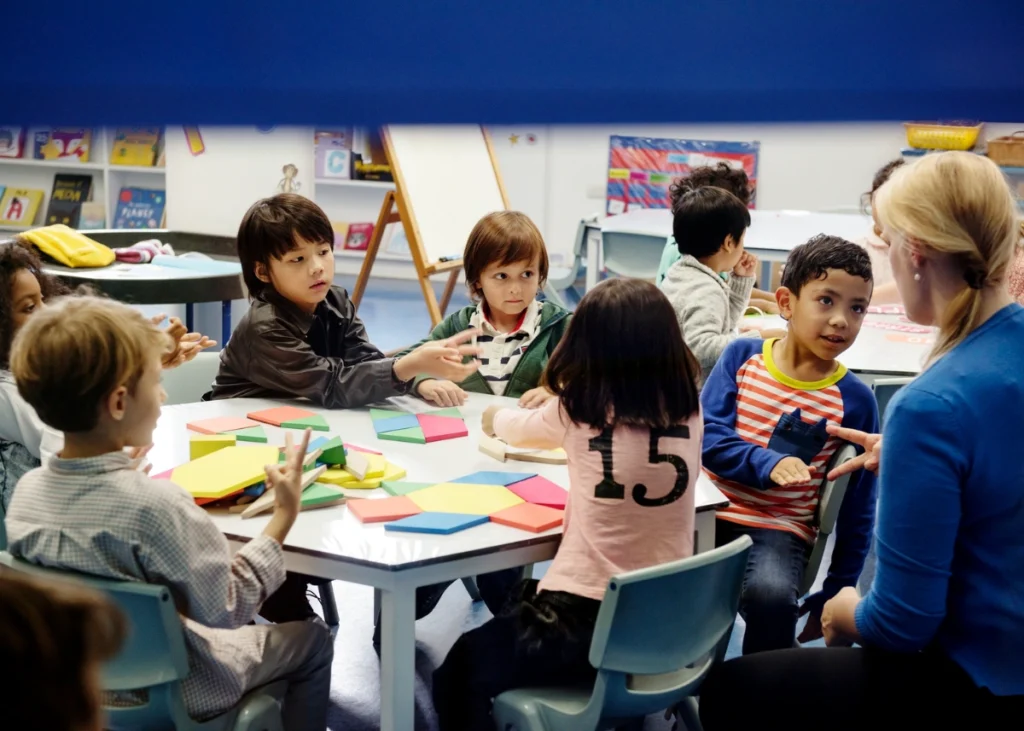
These six activities are good for starters. Still, your child improves most with a mix of home fun and formal classes. Fun English Course’s English for Children program fits that need. It serves grades 1–6 and covers listening, speaking, reading, and writing.
The curriculum meets international standards and uses proven methods. Plus, lessons stay lively and enjoyable. Accordingly, this combination gives your child both practice and structure.
Fun English Course holds several industry recognitions in children’s language instruction. Specifically, we won the Indonesia Most Recommended Education Award 2025. So give it a chance, you have little to lose and much to gain.
All in all, every child learns differently. Some love music, while others thrive on movement or storytelling. The advantage of these six activities of fun English learning for kids is that they can be adapted to match your child’s specific interests and personality.
If you want more help, try Fun English Course’s English for Children program. It adds professional teachers and playful lessons to your home routine. As a result, your child will speak English confidently—and fast. That said, the best time to start is now. Sign up today.