

Elevating your English from robotic to remarkably smooth is all about knowing which words to leave out, and that is precisely what examples of elliptical sentences show us. By naturally omitting repetitive phrases, you instantly make your writing and speech sound more polished and native-like.
So, what exactly is an elliptical sentence, and how do you use it? Let’s break down the elliptical sentence definition and examples here!
What is an Elliptical Sentence?
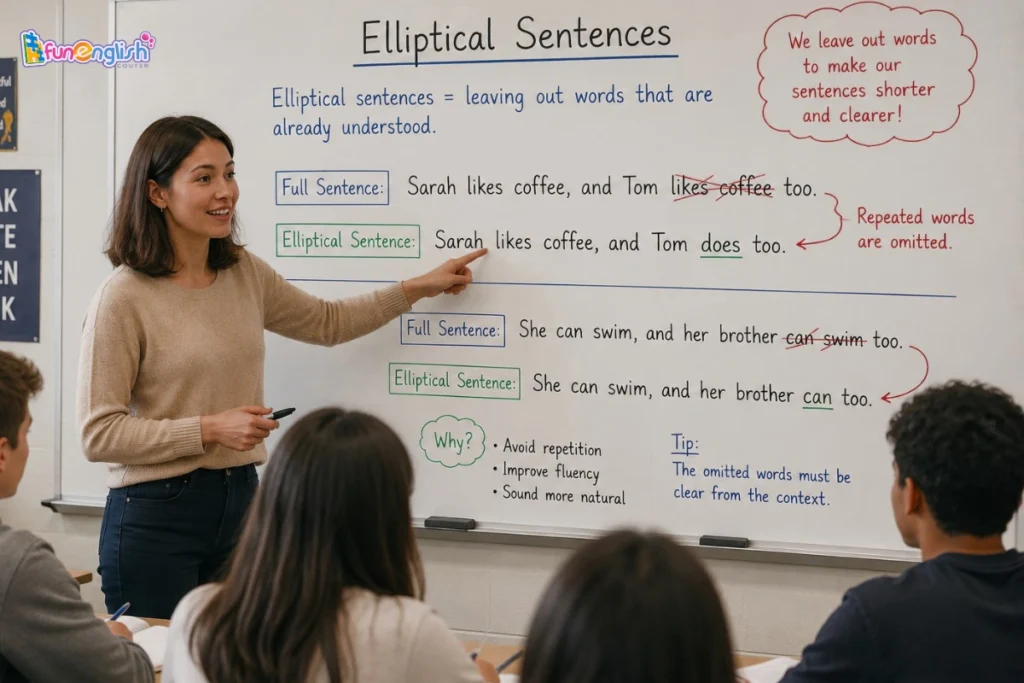
An elliptical sentence is a sentence where you intentionally leave out one or more words because the listener already completely gets the context. Instead of repeating the same words like a broken record, you simply delete them to keep your communication fast and sharp.
Types of Elliptical Sentences
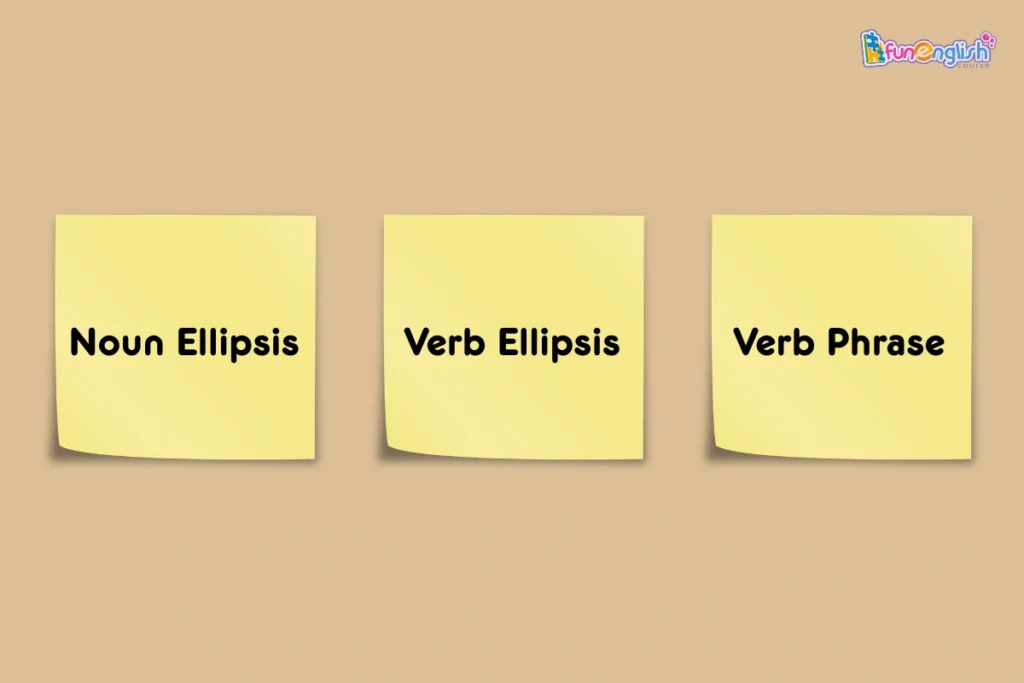
Elliptical sentences come in several forms. And here’s a simple example to show how each type works in everyday English:
1. Noun Ellipsis: Leaving out a repeated noun
- Full Sentence: I like the pullover hoodie, and my brother likes the pullover hoodie too.
- Elliptical Sentence: I like the pullover hoodie, and my brother likes it too.”
2. Verb Ellipsis: The repeated verb is replaced with a helper verb such as do, does, or did.
- Full Sentence: Egi plays games every weekend, and Bima plays games every weekend too.
- Elliptical Sentence: Egi plays games every weekend, and Bima does too.”
3. Verb Phrase Ellipsis: Removes an entire verb phrase because it is already understood.
- Full Sentence: Ica has finished her project, and Tom has finished his project too.
- Elliptical Sentence: Ica has finished her project, and Tom has too.
How to Use Elliptical in a Sentence?

The rule is simple: you can omit words that have already appeared or are strongly implied within the same sentence or the previous one.
Here are a few common patterns you can follow with elliptical construction examples:
1. Pattern 1 with Auxiliary Verbs (do, can, have, is, will…)
Subject 1 + Aux + Main Verb + … , and Subject 2 + Aux [+ Main Verb dropped]
examples of elliptical sentences:
- She can dance, and he can too.
- I will call you, and she will too.
You can also use so instead of too:
So + Auxiliary Verb + Subject
Examples:
- She loves reading. → So do I.
- They have finished the report. → So have we.
2. Pattern 2 without Auxiliary Verbs
Subject 1 + Verb … , and Subject 2 + do/does/ did + too
Example:
- My father wakes up before sunrise, and my older brother does too.
- The school promotes environmental awareness, and other schools do too.
3. Pattern 3 Using Either and Neither for Negative Agreement
Use either or neither when you agree with a negative statement. Instead of repeating the entire negative sentence, you can use these structures:
Either: Subject + Negative Auxiliary Verb + Either
Example:
- I don’t enjoy working on weekends unless it’s absolutely necessary. → I don’t either.
- My sister doesn’t feel comfortable speaking in front of large audiences. → My brother doesn’t either.
Neither: Neither + Auxiliary Verb + Subject
- They haven’t completed the final report for the client yet. → Neither have we
- I don’t check my email on weekends. → Neither do I
Mastering elliptical sentences, too, either neither will help you sound more natural because native speakers frequently use these structures to avoid unnecessary repetition.
4. Pattern 4 Using Ellipsis with Contrast (But)
Ellipsis does more than signal agreement. It can sharply contrast two things without spelling everything out twice.
Without Auxiliary:
Subject 1 + Verb …, but Subject 2 + do/does/did not
Examples:
- Sarah enjoys spicy food, but Tom doesn’t.
- Tom passed the exam, but Lisa didn’t
With Auxiliary:
Subject 1 + Auxiliary + Verb …, but Subject 2 + Auxiliary + not
- She can attend the online meeting, but our manager can’t.
- My parents are familiar with video calls, but my grandparents aren’t.
Now you know what they are, how they work, and when to use them! Examples of elliptical sentences show up every single day, in small talk, emails, stories, and beyond and like anything, practice makes it click.
Ready to take your English further? Fun English Course has a conversation program for you to join and build confidence, improve fluency, and learn to communicate more naturally. Join now or contact our team today for more information!