
Present Perfect Tense, three harmless words, but one giant grammar migraine. This tense may look innocent, but the way it mixes past and present can really throw you for a loop. Don’t worry, we’ll cut through the confusion and show you the ropes, fast and simple.
What Is the Present Perfect Tense?
It’s used to describe things that happened earlier but haven’t fully left us, events that echo into the present, still leaving a mark we can’t ignore.
Present Perfect Tense Examples:
- They have argued about pineapple on pizza for years. (The debate started long ago but is far from over.)
- My dog has stolen more socks than I can count. (He started young, and the habit continues.)
- Have they gone camping this summer? (The action may have happened earlier in the summer, but “this summer” is still current.)
Simple Past vs. Present Perfect: What’s the Difference?
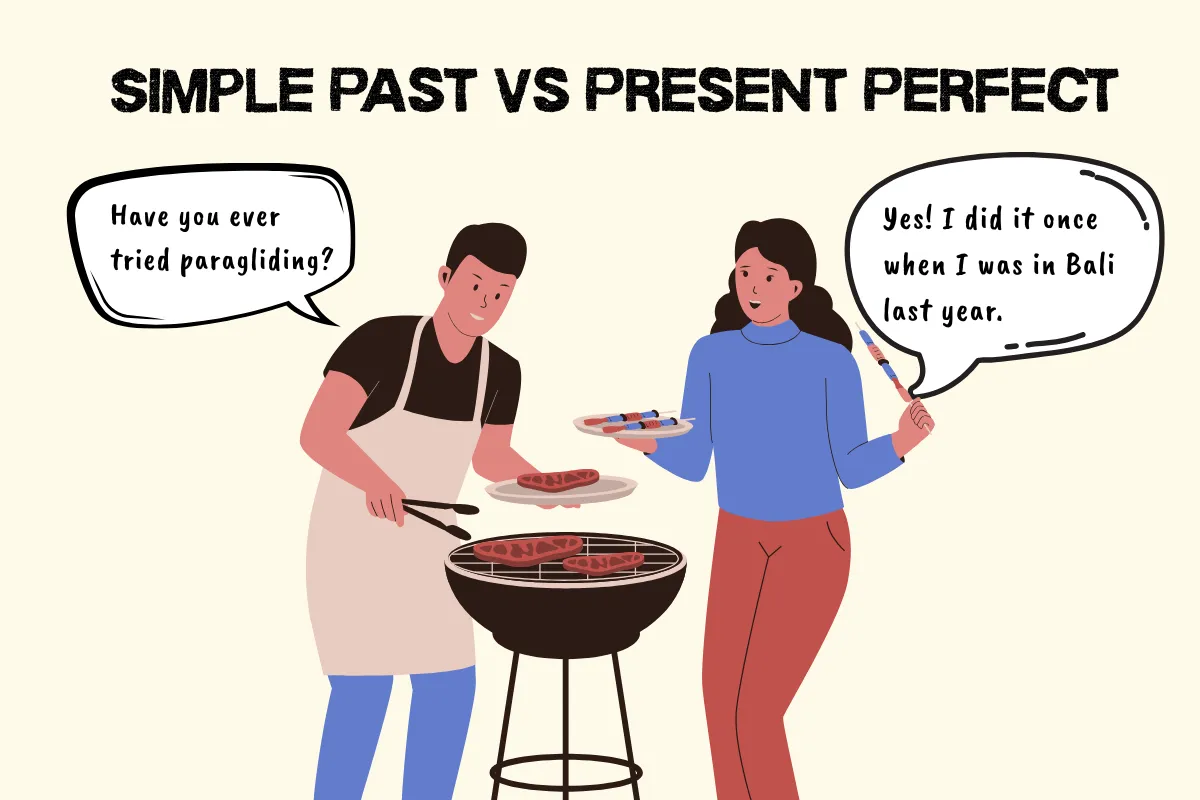
If both talk about the past, then what’s the real difference from the simple past tense?
This is where many learners encounter a roadblock. Both tenses deal with things that have already happened, but they don’t follow the same rules. One is about when it happened, and the other is about why it still matters.
Here’s a breakdown to make things more straightforward:
|
Simple Past |
Present Perfect |
|
Points to an exact moment that has already happened |
Refers to an unspecified time or focuses on the result now |
|
The action is completely finished or done |
The action is finished, but its effect or relevance is still present |
|
Commonly appears alongside time markers such as ‘yesterday’, ‘last week’, or a specific year like ‘2020’. |
Commonly paired with time markers like ever, never, just, already, yet, recently, and so far. |
|
Answer the question “When?” |
Answer the question “Have you…?” or show life experience or results |
Simple Past Tense Example:
- I went to the museum yesterday. (The task was finished, and we know exactly when it happened yesterday.)
- She cooked dinner last night. (Once more, the event wrapped up clearly — this time, it happened last night.)
Present Perfect Tense Formula
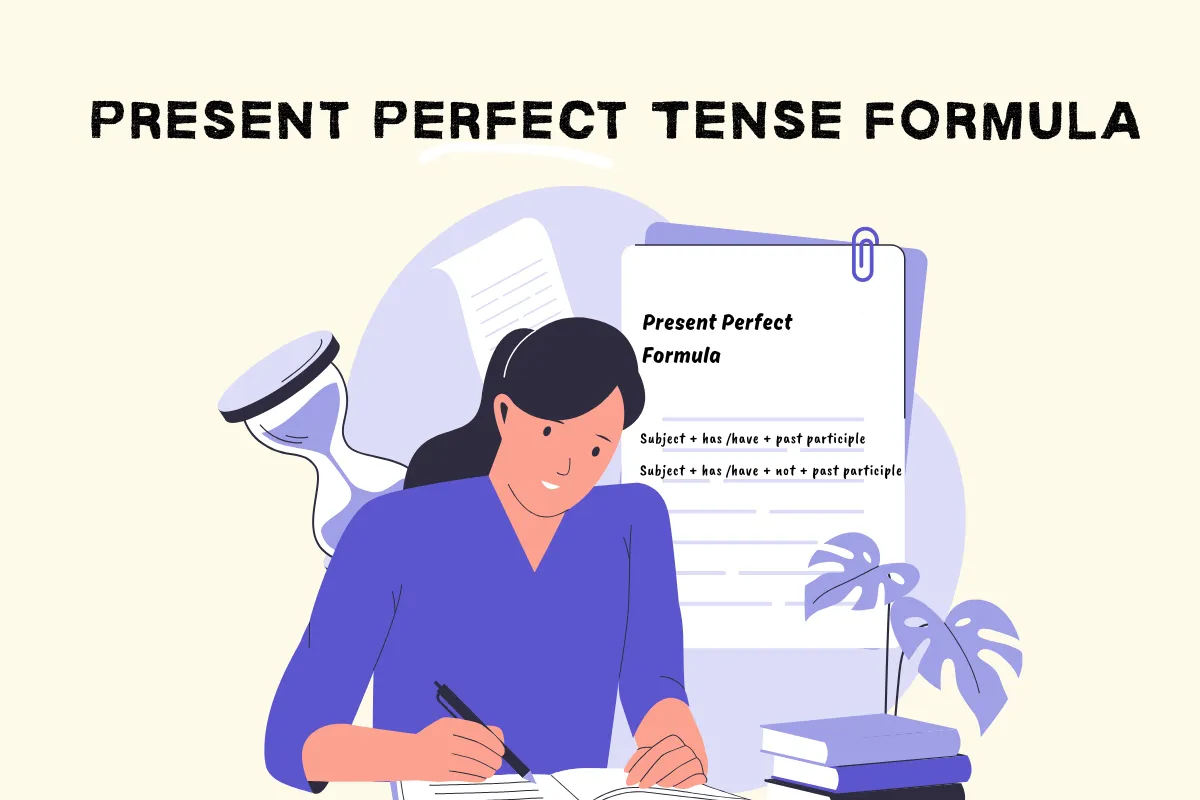
Let’s get into the nuts and bolts. To use this tense in everyday English, you need to start with the basics, and that means understanding the present perfect tense structure. Once you’ve got this part down, everything else becomes easier, from making sentences to asking questions.
|
Type |
Formula |
Example |
|
Positive Sentence |
Subject + has (he, she, it)/have (I, you, we, they) + past participle (V3) |
You have replayed that one voice note at least ten times. |
|
She has spoken to her cat as if it’s a therapist since moving out. |
||
|
Negative Sentence |
Subject + has (he, she, it)/have (I, you, we, they) + not + past participle (V3) |
I have not eaten lunch from the canteen all week. |
|
She has not worn her school badge this week. |
||
|
Question Sentence |
Has (he, she, it)/Have (I, you, we, they) + subject + past participle (V3)? |
Have we locked the door? |
|
Have we packed everything we need? |
||
|
Question Word |
Question Word + have/has + subject + past participle (V3) |
What have you eaten today? |
|
How has your vacation gone so far? |
Mastering the present perfect tense rules is a key step toward speaking English naturally and effectively. It helps you move beyond basic grammar to more confident and expressive communication. At Fun English Course, we make that leap easier and more enjoyable.
Our experienced mentors and engaging, interactive lessons are designed to help you truly use grammar like the present perfect tense in everyday conversations, not just understand it on paper. With real-life practice and personalized guidance, you’ll gain the confidence to speak naturally, accurately, and easily.
Start learning the smart way by joining our Fun English Course today and speaking English with confidence! For work, school, or even your TOEFL goals!